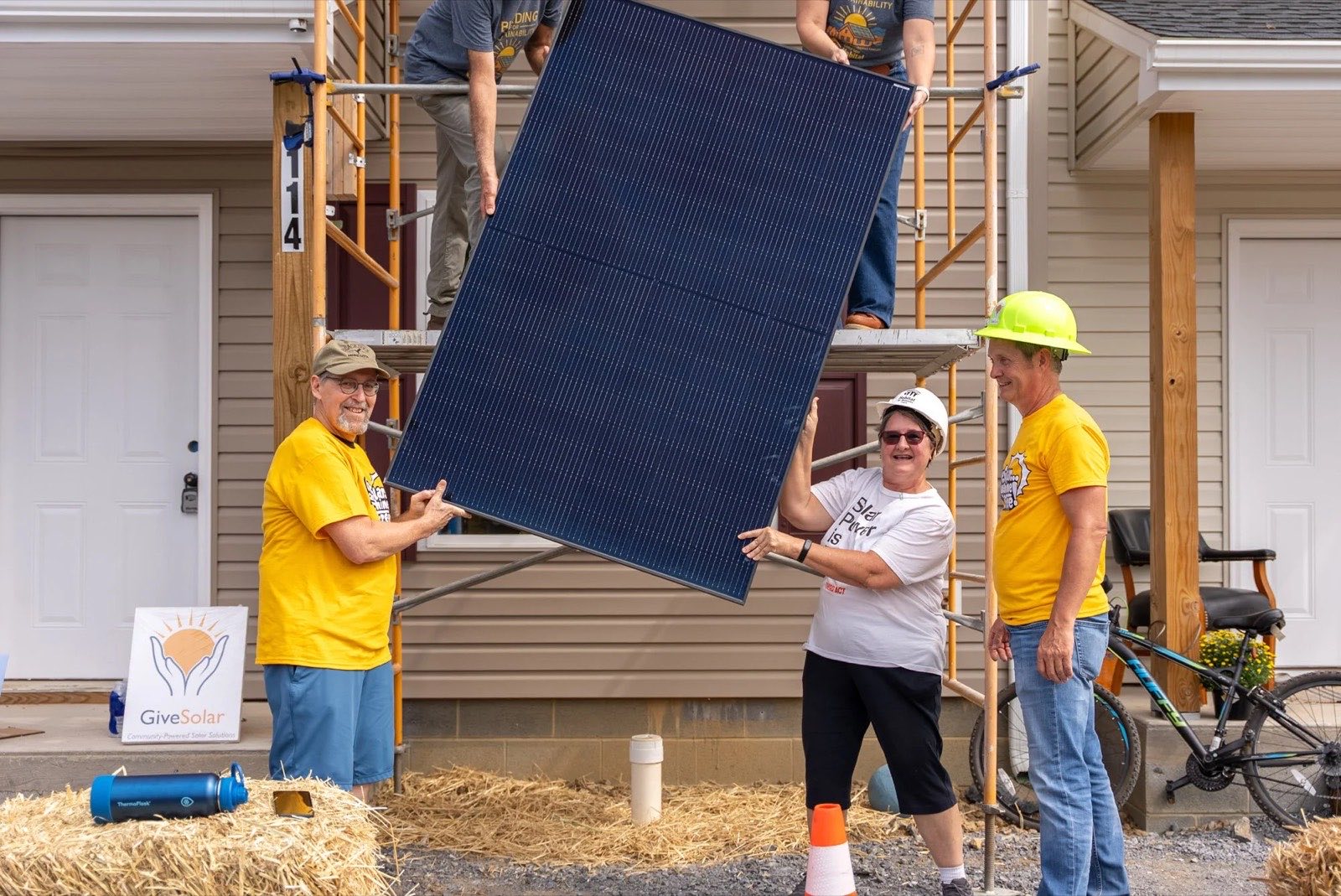
$200
buys one panel
$12,500
covers a whole system
$500,000
starts a state program
Where a donation goes
Your donation helps a hardworking Habitat family get solar on their home, which makes that home more affordable and protects them from rising energy prices. The affiliate has already built the house, so a donation does not pay for that. It closes the one gap that stops an array going on: the difference between a build budget and the cost of the panels.
- $200
- Buys one solar panel. Twelve to fourteen of them make a system.
- $12,500
- Covers a complete system for one home, about 5 kW, saving that family about $84 a month at 2026 rates.
- $500,000
- Starts a statewide solar program, which is how a state goes from no solar on Habitat homes to a standing pipeline of them.
The saving shows up on the power bill. Nothing is added to the mortgage, and the array's output serves the household for the life of the panels.
Where the program stands, and how far it can go
218 homes with solar installed or contracted
10,000 Habitat homes
homes with solar installed or contracted about 750 more pre-screened and waiting on funding
$200 buys a panel. $12,500 covers a whole system.
$500,000 starts a statewide program. Sponsorships are assigned by build date, so a commitment made now lands on a specific roof with a specific family.